
Community
Why 80 Percent of Your Guests Should Come Back (And Why Most Retreats Get 10)
Repeat guests aren't a personality trait. They're a business decision you make months before the retreat even starts.

You run a good retreat. People cry in the closing circle, hug it out, promise to stay in touch. Then the group chat goes quiet by week three and you never hear from most of them again. You tell yourself that's just how it goes. It's not.
The Number Nobody Asks About
Most retreat leaders can tell you their Instagram followers off the top of their head. Ask them their repeat guest rate and you get a shrug. That's backwards. Followers don't fill beds. Guests who come back twice, three times, five times, that's the number that tells you if you're building a business or just running events.
An 80 percent return rate isn't magic. It's not even about the retreat being spectacular, though it should be good. It's about what happens in the ninety days after everyone flies home, because that's where most leaders go completely silent and let the whole relationship die on the runway.
It Doesn't Start at the Closing Circle
Here's where people get it backwards. They think loyalty gets built during the retreat, in the big emotional moments, the bonfire, the last dinner. Those moments matter, but they're not what brings someone back a second time.
What brings someone back is what happens after. Did you actually stay in their life, or did you disappear until the next launch email six months later asking them to book again? Silence reads as "you were a transaction." A voice memo three weeks later asking how they're settling back in reads as "you were a person to me."
The Follow Up Window Almost Everyone Wastes
The first thirty days after a retreat ends is the highest leverage window you have all year, and almost nobody uses it. People are still glowing. They're telling their coworkers about the trip. They're the most open to you they'll ever be, and most leaders spend that window doing nothing but posting a highlight reel and moving on to the next launch.
Send a real message in the first week. Not a survey, a person checking in. Share a photo they didn't take. Ask what's already fading and what's sticking. Small moves, but they're the difference between a guest who filed the trip away as a nice memory and one who's already planning to come back.
Build the Return Before You Build the Next Retreat
Leaders obsess over filling the next trip and treat the last one as finished business the moment the vans pull away. Flip that. The last retreat is your best source for the next one, but only if you keep the thread alive between them.
That means small rituals. A private group that stays open after everyone leaves instead of going dead on day two. A yearly reunion call. First access to new dates before anyone on your general list hears about them. None of this is complicated. It's just the stuff that gets skipped because launching the next thing always feels more urgent than tending the last one.
The leaders who hit real return rates aren't doing anything you couldn't do this month. They're just doing the unglamorous follow up work that everyone else skips because it doesn't feel like marketing. It is marketing. It's the best kind, because it costs almost nothing and the person on the other end already trusts you.
Your move this week
Pull the guest list from your last retreat. Send five of them a real message today, not a template, a specific memory from their trip and a genuine question about how they're doing since. No pitch. No CTA. Just see what comes back, and notice how different that feels from a launch email.
You don't earn a repeat guest at the closing circle. You earn them in the ninety days after, when nobody's watching.
You know how to run a retreat. We teach you how to build the business behind it.
Keep Reading
One useful idea a week for retreat leaders.
New articles, podcast episodes, and quiet behind-the-scenes notes from the studio.
Keep reading
Related articles



From the shop
Tools that pair with this
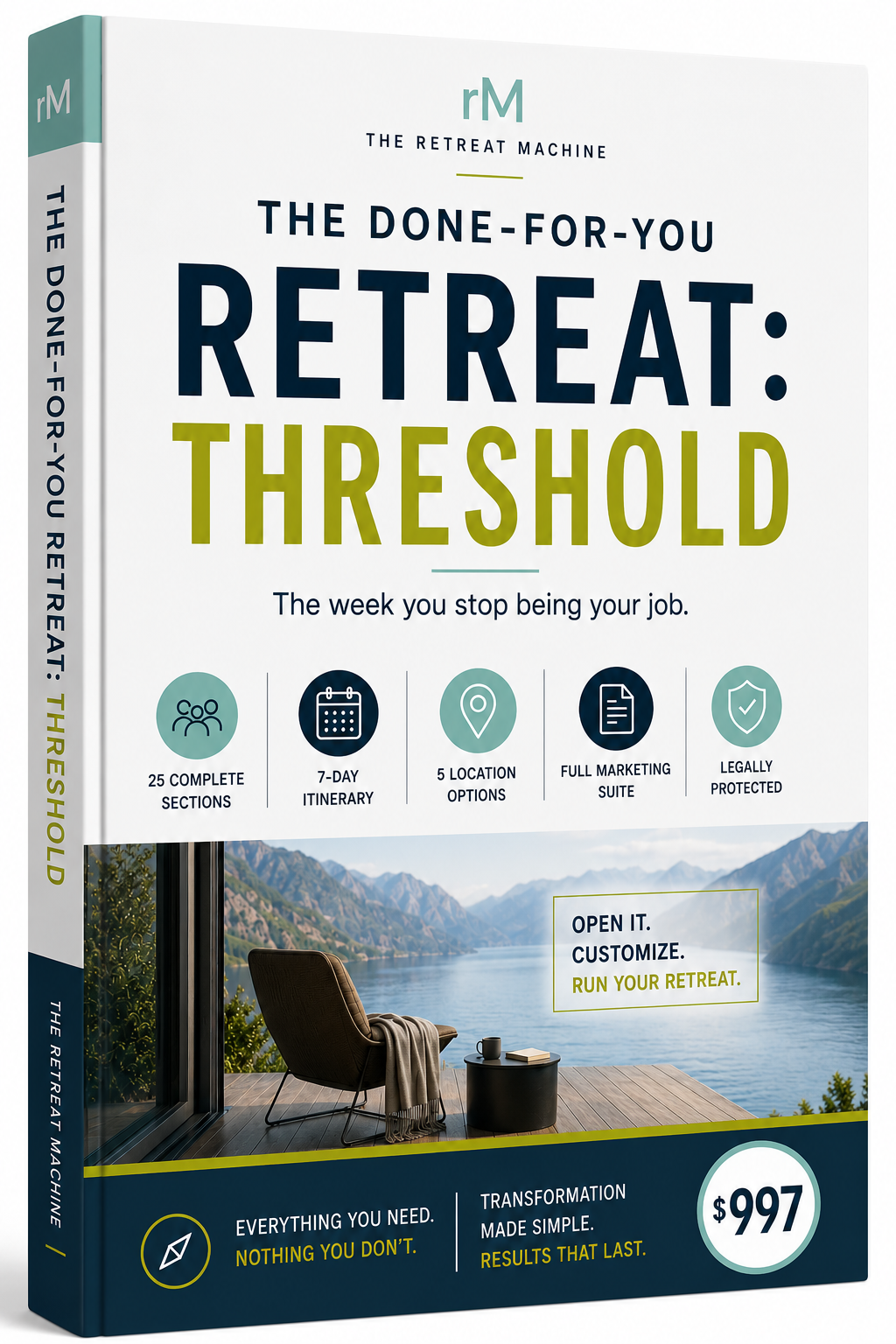
Threshold
Help people discover who they are after the career ends—and give yourself a transformational retreat that's ready to launch.

The Book of Icebreakers
Twelve proven experiences that turn strangers into a community.
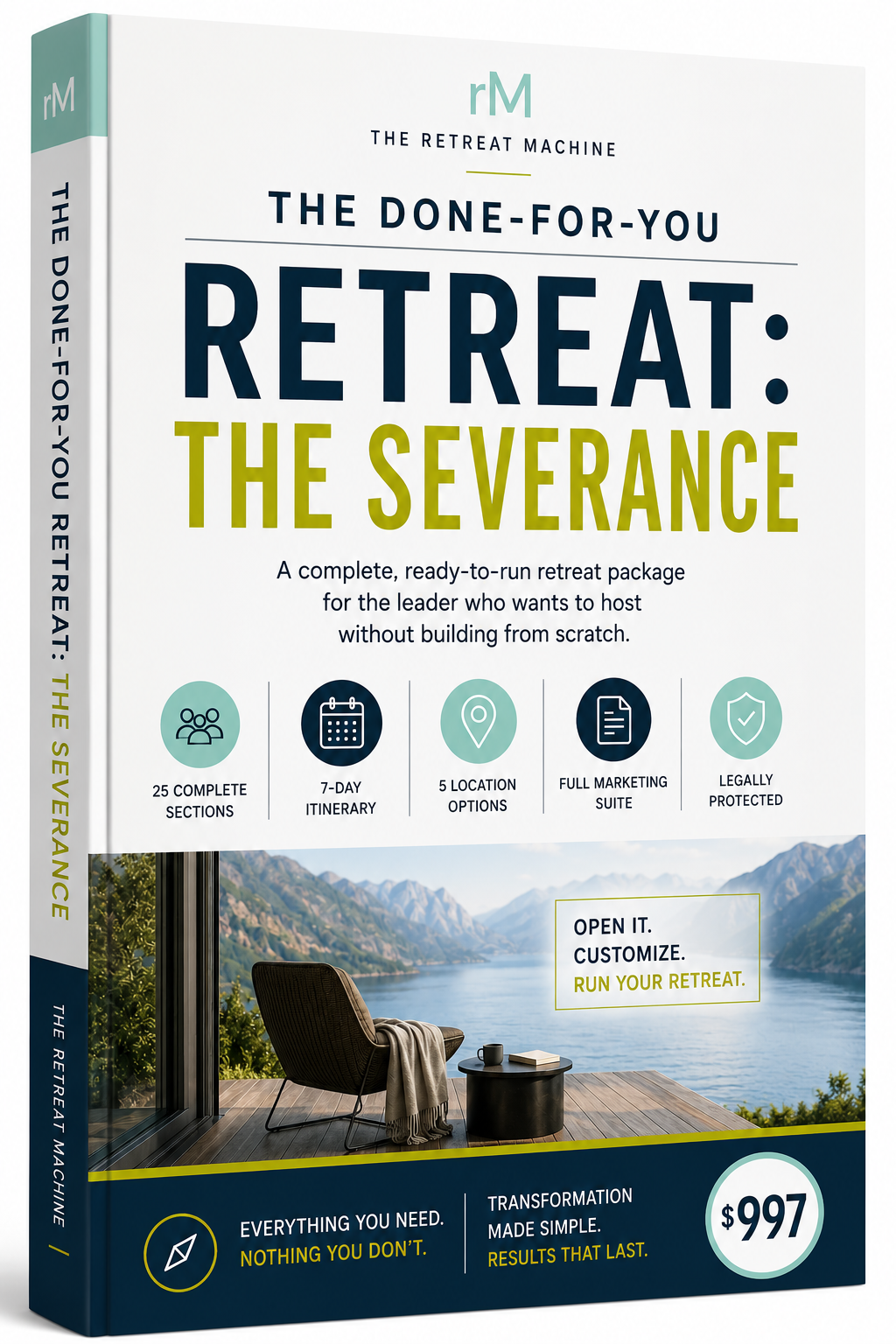
The Severance — Done-For-You Retreat
Help women rediscover who they are after losing their careers—and give yourself a transformational retreat that's ready to launch.